Spray Foam

Spray foam insulation that seals tight and stays put.

Spray foam is one of the strongest insulators we install. It expands to fill every gap, seals out air leaks at the same time, and holds its R-value for the long haul. We use Huntsman spray foam because it performs reliably across the board, from whole-house jobs to finished basements to the trickier corners of an older home.

What spray foam does well

  • Seals air leaks while it insulates
  • High R-value per inch
  • Resists moisture and mold
  • Holds its performance for decades
  • Adds rigidity to walls and roof decks

Where it pays off

Spray foam really pays off.

Spray foam isn’t the answer for every square foot. It earns its place in a handful of specific spots, the ones where standard insulation can’t get a clean fit or where air sealing matters as much as R-value. Here’s where you’ll see it most often.

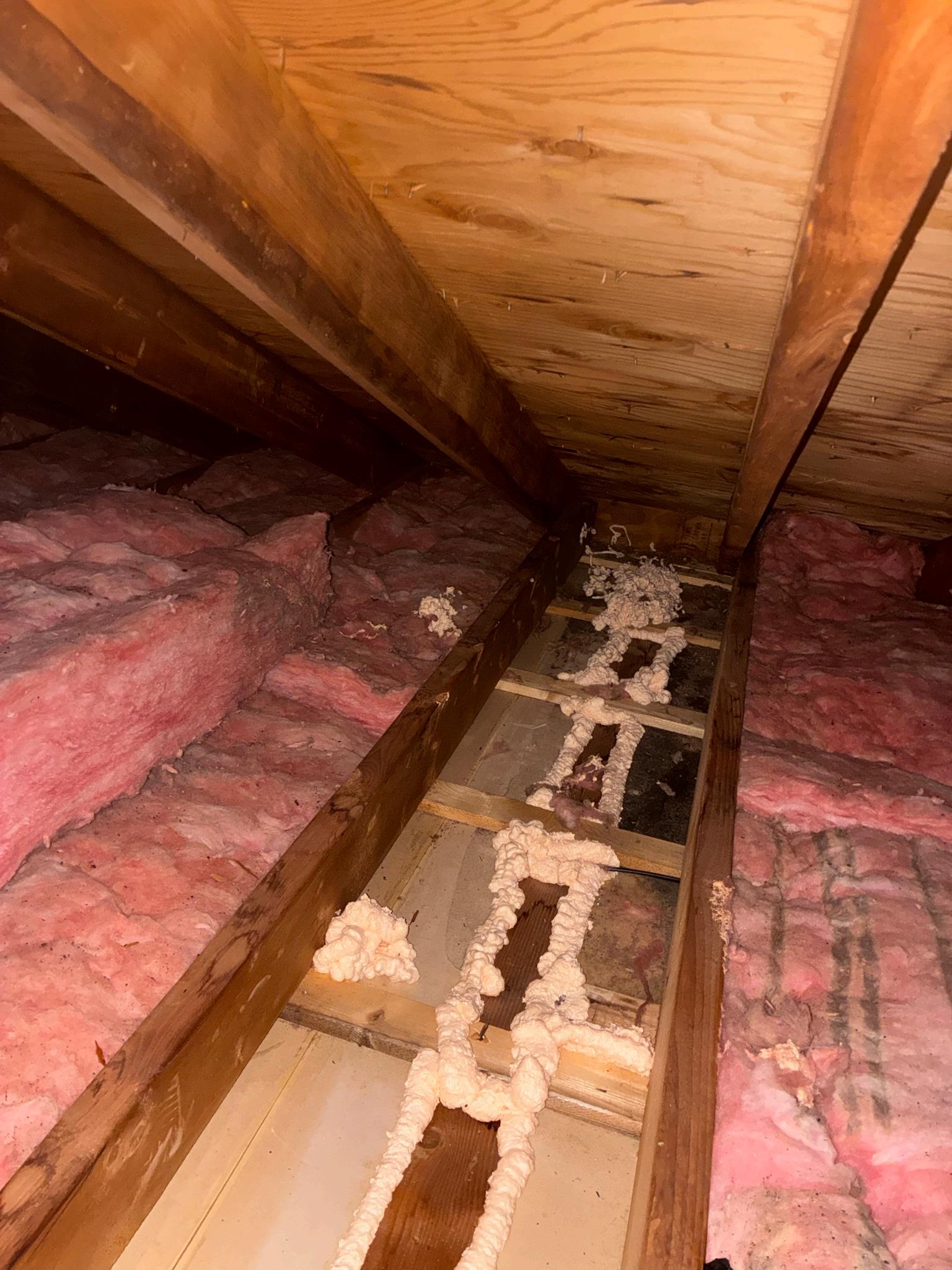
Spray foam insulation in an attic application Attics

Cathedral ceilings, kneewalls, and slope sections

When a bonus room over the garage or a bedroom behind a kneewall feels like a different climate zone, the issue is usually the slope or transition behind the wall. Spray foam seals the tight cavities where batts can’t get a clean fit.
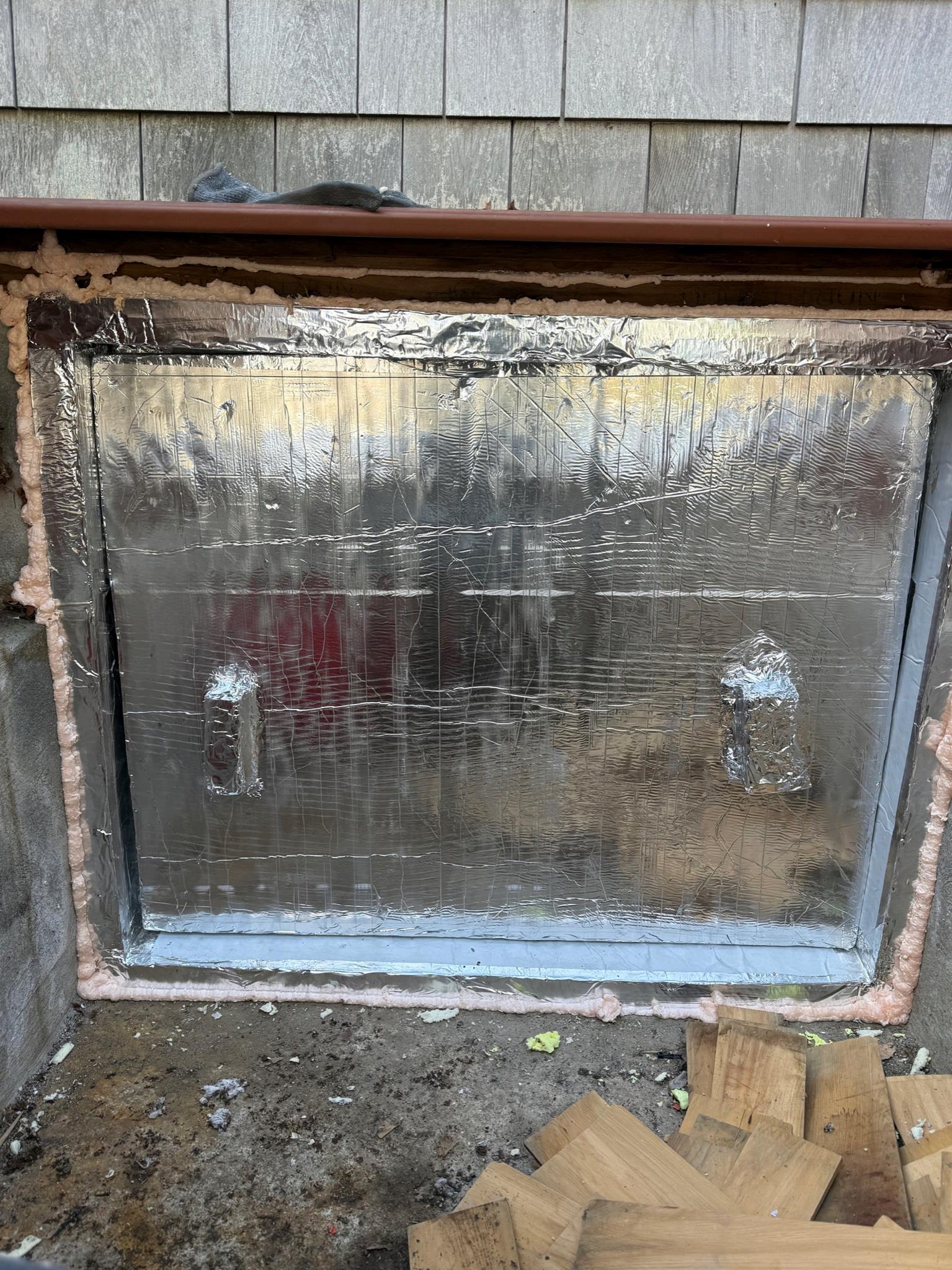
Spray foam insulation in a crawl space Crawlspaces

Crawl spaces with cold floors above

Crawl spaces leak air into the floors above and pull moisture in from below. Foam at the rim joists and along the walls usually does more for comfort than blown-in ever will down there.
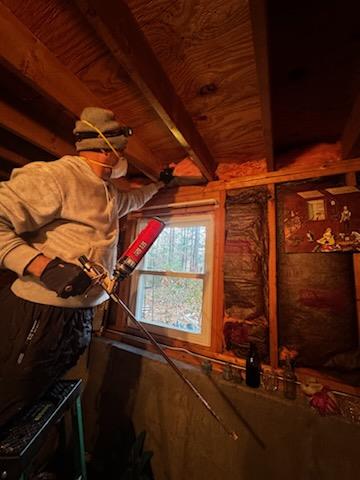
Spray foam insulation applied at rim joists Rim Joists

The band where it almost always leaks

The wood band where your floor framing sits on the foundation, almost always a major air leak path. Spray foam here often shows up on the heating bill that winter.
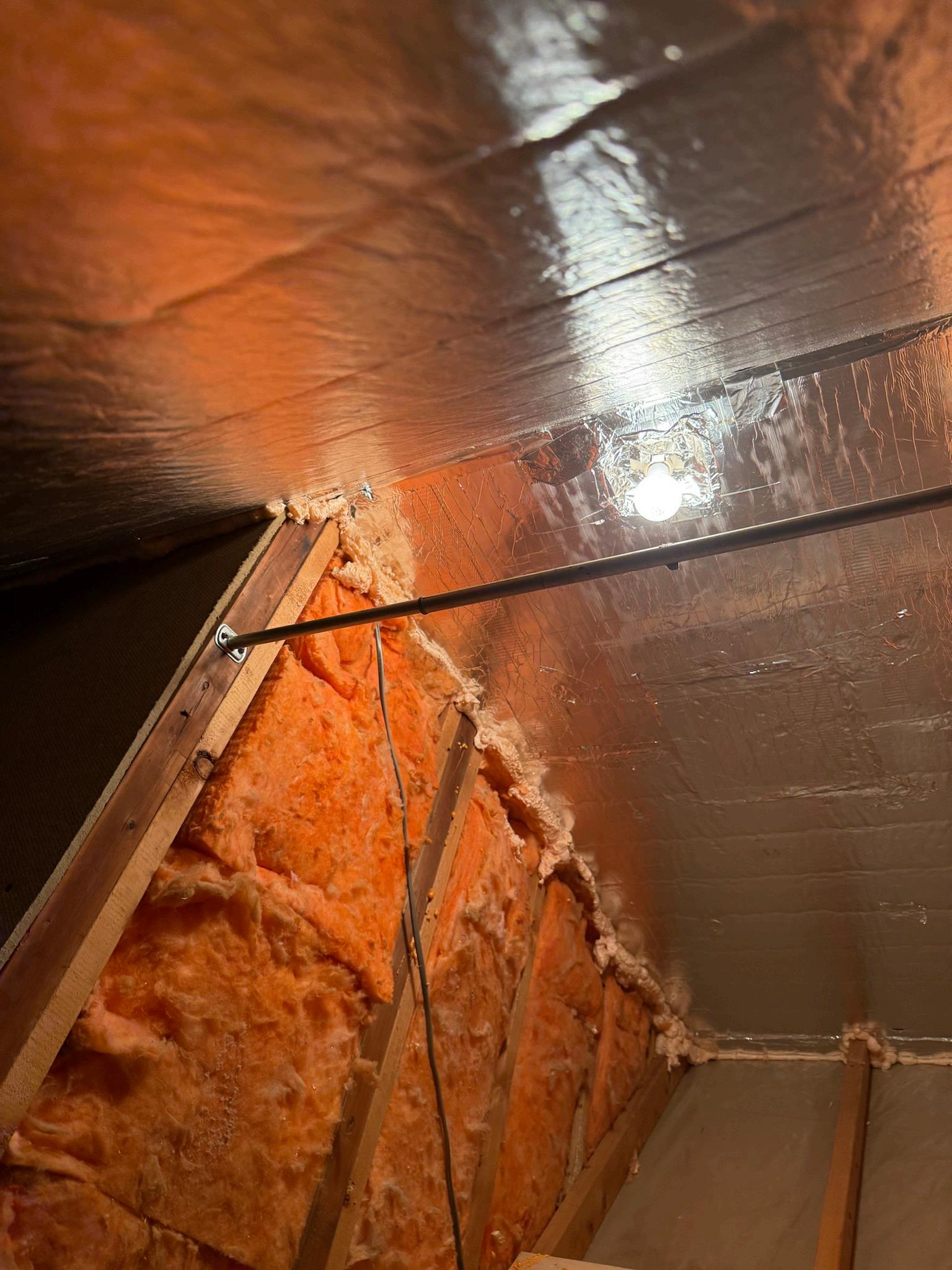
Spray foam insulation in a tough-to-reach problem area Problem Areas

Tough to reach spots most skip

Around attic hatches, behind chimneys, where additions meet original framing. The corners and transitions where standard insulation just can’t get a good fit.

Benefits

Why homeowners notice the difference.

R-values and chemistry are fine but they’re not why you’d ever notice the difference. Here’s what actually changes after the work is done.

Air sealing

Two jobs in one pass.

Most insulation slows heat loss. Foam stops air movement too. That matters more than R-value in places like rim joists and crawl spaces, where most of the heat is leaving with the air, not through the surface.

Comfort

Drafts and cold spots fade.

Drafts at the floor near exterior walls, cold spots over the rim joist, bonus rooms that never hold a temperature. Foam in the right spot usually quiets all of it.

Efficiency

Less wasted heat in the right spots.

When air sealing and insulation happen together, your heating system actually gets to keep the air you paid to condition. The savings show up most in homes where leakage was the bigger problem all along.

Performance

It stays where you put it.

Foam doesn’t sag, settle, or compress over time. Twenty years later it’s in the same spot, doing the same job. No top-ups, no re-blowing the attic.

Next step

Let’s figure out where foam fits, and where it doesn’t.

The fastest path is a direct conversation. Tell us the spot in the house, what you’re noticing, and whether it’s an area we can easily get to. We’ll tell you whether spray foam earns its place or whether something simpler will do.

  • Family-owned
  • BPI-certified
  • No upsell pressure
Installer applying spray foam insulation at a rim joist
Built for the tight spots standard insulation misses.